


As we move deeper into the mid-2020s, the sterile minimalism of the early decade is thawing, replaced by a desire for warmth, narrative, and “radical authenticity.” Enter Afrohemian—a portmanteau of African and Bohemian—which has evolved from a niche aesthetic into the defining “Future Heritage” style of 2025-2026.
This is not just about aesthetics; it is about grounding. In a world accelerated by AI and digitization, the Afrohemian home serves as a tactile sanctuary. It blends the free-spirited, plant-filled ethos of bohemian decor with the bold geometry, deep heritage, and exquisite craftsmanship of the African diaspora.
For the 2025/2026 cycle, we see a shift toward “Techno-Ancestral” design: items that use ancient techniques (weaving, pottery) but apply them to modern, sustainable, and sometimes tech-integrated forms.
The 2025-2026 Color Palette
Before we dive into the curated list, ground your space with the official forecast colors of the year.
- Mocha Mousse (Pantone 2025):
#A47864– A rich, grounding brown that replaces grey as the neutral of choice. - Future Dusk (WGSN 2025):
#484b64– A dark, moody violet-blue representing the mystery of the digital age. - Transformative Teal (WGSN 2026):
#304263(Approx/Coloro 092-37-14) – A regenerative deep blue-green signaling eco-responsibility. - Electric Fuchsia:
#F04E98– A high-energy digital accent color for bold textile pops.
The 12 Afrohemian Decor Essentials (2025-2026 Showcase)
Here are the 12 definitive items to bring this “Global Soul” aesthetic into your home, featuring official artisan sources.
1. The Sculptural “Techno-Woven” Pendant Light
Lighting in 2025 is no longer just functional; it is art. The new Afrohemian light fixture combines traditional weaving techniques with modern, sculptural silhouettes.

- Official Source: 54kibo
- Why It’s Future-Ready: 54kibo curates contemporary African design that fits the “Future Heritage” mold. Their lighting collections often feature hand-woven fibers (like telephone wire or ilala palm) structured into geometric, physics-defying shapes that cast intricate shadows—perfect for creating “mood zones” in smart homes.
- Pricing/Licensing: Luxury tier; Pendant lights typically range from $300 to $900.
2. The Regenerative Biophilic Planter
Plants are the lungs of the Afrohemian home. In 2026, the focus is on regenerative materials. We are moving away from plastic pots to baskets made from invasive plant species or upcycled tires.

- Official Source: Mo’s Crib
- Why It’s Future-Ready: Based in South Africa, Mo’s Crib is a pioneer in sustainability. Their PVC planters are upcycled from reclaimed water pipes, and their woven baskets use invasive alien vegetation—literally healing the ecosystem while decorating your home. This “circular economy” decor is the gold standard for 2026.
- Pricing: Accessible luxury; Planters range $50 – $150.
3. The Neo-Heritage Aso Oke Chair
Furniture is moving away from “fast fashion” toward “forever pieces” that tell a story. The Aso Oke chair is the centerpiece of the Afrohemian living room, blending Nigerian textile history with mid-century modern lines.

- Official Source: Ile Ila (House of Lines)
- Why It’s Future-Ready: Architect Tosin Oshinowo’s brand, Ile Ila, redefines the armchair. By using vintage Aso Oke (hand-loomed cloth from the Yoruba people) on contemporary frames, these chairs are “Post-Industrial”—rejecting mass production for hyper-local, artisan-crafted narratives.
- Pricing: High-end bespoke; Inquire for pricing (typically $1,500+).
4. The Ethical Luxury Rug
Grounding your floor with texture is essential. The trend for 2025 is “Soft Geometry”—rugged, hand-dyed wools with patterns that mimic digital glitches or ancient topography.

- Official Source: Bolé Road Textiles
- Why It’s Future-Ready: Designed in New York and handwoven in Ethiopia, Bolé Road represents the perfect global fusion. Their 2025 collections focus on “Modern Ancestry,” using lighter, softer palettes (like dusty pinks and terracottas) that align with the “Warm Minimalism” trend.
- Pricing: $200 (pillows) – $2,500+ (rugs).
5. The “Joy Maximist” Accent Piece
The “FunHaus” trend of 2026 encourages playfulness. Gone are the days of sad beige. Afrohemian decor embraces “parables in furniture”—items that are bright, bold, and tell a story.

- Official Source: Yinka Ilori
- Why It’s Future-Ready: British-Nigerian designer Yinka Ilori is the king of storytelling through object. His upcycled chairs and vibrant tableware are antidotes to digital fatigue. They introduce the “Dopamine Decor” concept—using color to physically boost mood.
- Pricing: Collectible objects from $60 (tableware) to $5,000+ (furniture).
6. The Minimalist Afro-Scandi Table
A sub-trend of Afrohemian is “Afro-Scandi”—the intersection of African warmth and Scandinavian functionality. Think concrete, wood, and clean lines.

- Official Source: Studio Badge
- Why It’s Future-Ready: Based in Ghana, Studio Badge creates minimalist furniture that highlights the raw beauty of Ghanaian hardwoods like Teak and Walnut, often paired with concrete. This “Raw refinement” fits the 2026 desire for materials that age well and resist the disposable culture.
- Pricing: $300 – $1,200 depending on the piece.
7. The Narrative Wallpaper
Walls in 2025 are canvases. “Maximalist murals” are in, specifically those featuring batik, Ankara, or botanical motifs that turn a room into a lush garden.

- Official Source: Eva Sonaike
- Why It’s Future-Ready: Eva Sonaike’s “Falomo” or “Eko” collections bring high-fashion African prints to vertical surfaces. The futuristic appeal lies in the “biophilic envelopment”—using wallpaper to create an immersive, nature-inspired environment inside an urban apartment.
- Pricing: Luxury wallpaper rolls approx $180 – $250 per roll.
8. The Curated Vintage Artifact
Sustainability means looking back. The “Retro Revival” of 2026 isn’t just about 1970s America; it’s about 1970s Lagos, Accra, and Harlem.

- Official Source: BLK MKT Vintage
- Why It’s Future-Ready: This brand curates black history and collectibles. In an Afrohemian home, a vintage Jet magazine from the 70s or an old-school vinyl record isn’t clutter—it’s an “analog anchor” that grounds the space in history, providing a tactile break from the metaverse.
- Pricing: Varies by item rarity; $30 – $500+.
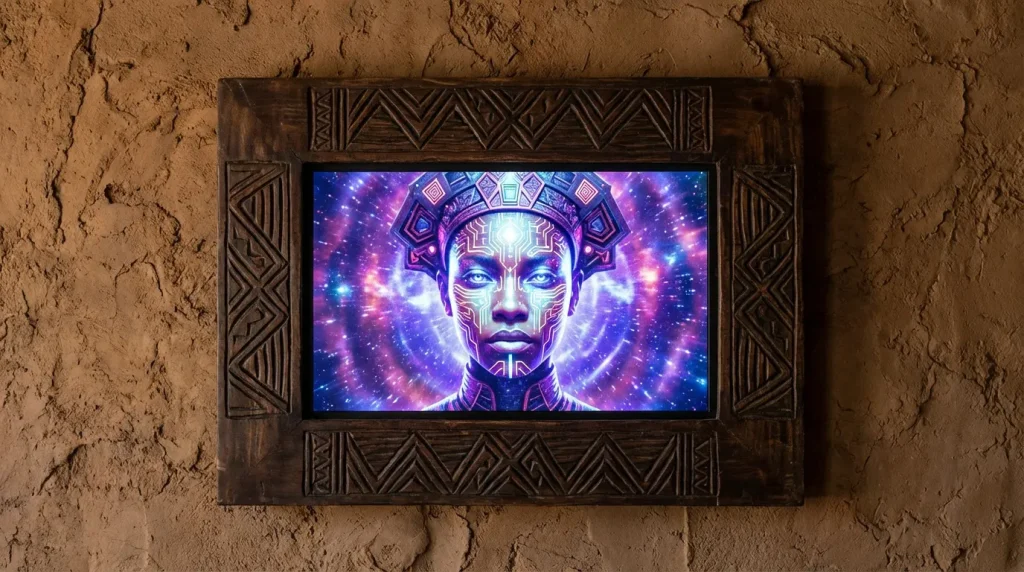
9. The Digital-Physical Art Frame (NFT Display)
We cannot ignore the digital. The Afrohemian home of 2026 seamlessly integrates digital art by African creators, displayed in artisan-crafted physical frames.
- Official Source: The Folklore (Lifestyle Section) & OpenSea (For Art)
- Why It’s Future-Ready: “Phygital” decor is rising. Use a dedicated digital canvas (like Meural or Samsung The Frame) but frame it in reclaimed wood. Display rotating art from digital Afro-futurist artists. The Folklore often highlights brands that bridge these worlds.
- Pricing: Hardware $400+; Art varies.
10. The Sensory Scentscape
Decor is multi-sensory. 2026 design emphasizes “invisible aesthetics”—how a room smells is as important as how it looks.

- Official Source: Côté Bougie Marrakech
- Why It’s Future-Ready: This Moroccan brand combines traditional scents (Mint, Fig, Date) with handcrafted ceramics. Once the candle burns down, the vessel remains as a piece of decor. It aligns with the “Slow Living” movement, turning daily rituals into luxury experiences.
- Pricing: Candles approx $50 – $120.
11. The Fair Trade Woven Basket Wall
The “Basket Wall” is a staple, but the 2026 version is curated, minimal, and monochromatic or strictly geometric, moving away from the chaotic clusters of the past.

- Official Source: Expedition Subsahara
- Why It’s Future-Ready: These aren’t just baskets; they are education. Expedition Subsahara uses funds to build STEAM schools for girls in Senegal. The “Future” here is ethical consumerism—knowing your wall decor is literally building the future infrastructure of education.
- Pricing: $30 – $150 per basket.
12. The Architectural Clay Object
Ceramics are moving away from perfect glazes to “Earth-Texture.” Raw clay, terracotta, and matte finishes that mimic the ground itself.

- Official Source: 54kibo (Ceramics section) or Local Artisan Markets.
- Why It’s Future-Ready: In a high-gloss digital world, matte, rough textures ground us. Look for “fractal” designs or vessels that look like excavated artifacts but feature modern, sharp lines.
- Pricing: $80 – $300.
Comparison: Boho vs. Afrohemian (The 2026 Shift)
| Feature | Traditional Boho (2015-2020) | Future Afrohemian (2025-2026) |
|---|---|---|
| Primary Material | Macramé (Cotton) | Woven Grasses / Raffia / PVC |
| Color Palette | All White / Neutral Beige | Mocha Mousse / Teal / Fuchsia |
| Furniture Style | Low-slung, unstructured | Sculptural, Mid-Century Fusion |
| Art | Generic Mandalas | Heritage Storytelling / Digital Art |
| Sustainability | Fast-fashion mimics | Heirloom / Upcycled / Fair Trade |
Futuristic Prediction: Late 2026 Outlook
As we look toward late 2026, expect “Smart Heritage” to dominate. We predict the rise of textiles embedded with ambient lighting (e.g., woven throws that glow softly) and furniture tags that use blockchain to verify the artisan’s identity and fair wage payment. The Afrohemian home will not just look global; it will be a verified node in a global ethical network.
FAQ: Styling Your Global Soul Home
Q: Can I mix Afrohemian with Modern Minimalism?
A: Absolutely. This is called “Afro-Minimalism.” Use a neutral base (Mocha Mousse or warm white) and add one statement piece, like an Ile Ila chair or a large Mo’s Crib planter. Let the texture do the talking, not the clutter.
Q: Where can I find affordable Afrohemian decor?
A: While the brands listed above are artisan/luxury, you can achieve the look by visiting local flea markets for vintage brass and wood. Focus on natural materials (jute, clay, wood) rather than plastic imitations.
Q: What is the “Global Soul” trend?
A: Global Soul is the 2025 design philosophy that prioritizes emotional connection over perfection. It creates spaces that feel “collected” over time from around the world, rather than “decorated” from a catalog.
Q: Is this style sustainable?
A: It is one of the most sustainable styles if you buy authentic. Authentic Afrohemian decor supports artisans who use renewable, biodegradable materials (grass, clay, wool) and traditional low-carbon manufacturing techniques.
